Delhivery’s
Routing Engine

Overview
Our team was responsible for developing a Third Party Logistics (3PL) SaaS tool to help smaller businesses efficiently manage their logistics. The platform offered features for dispatch management, order tracking, and route optimization.
For this module, we were designing a routing engine - A software tool that optimizes routes for maximum efficiency. It helps businesses determine the fastest and most cost-effective paths between multiple stops, saving time, reducing costs, and improving overall operational efficiency.
My Role
Research, Concept Ideation, Storyboarding, Visual Design, Prototyping, Handoff
The Team
Suhad M - Product Designer
Monisha R - Product Designer
Avinash Pillai - Design Manager
Duration
Jan 2024 - May 2024
The Flow
User selects a set of jobs from an overall list to create a plan
User opts for the routing engine and inputs the parameters
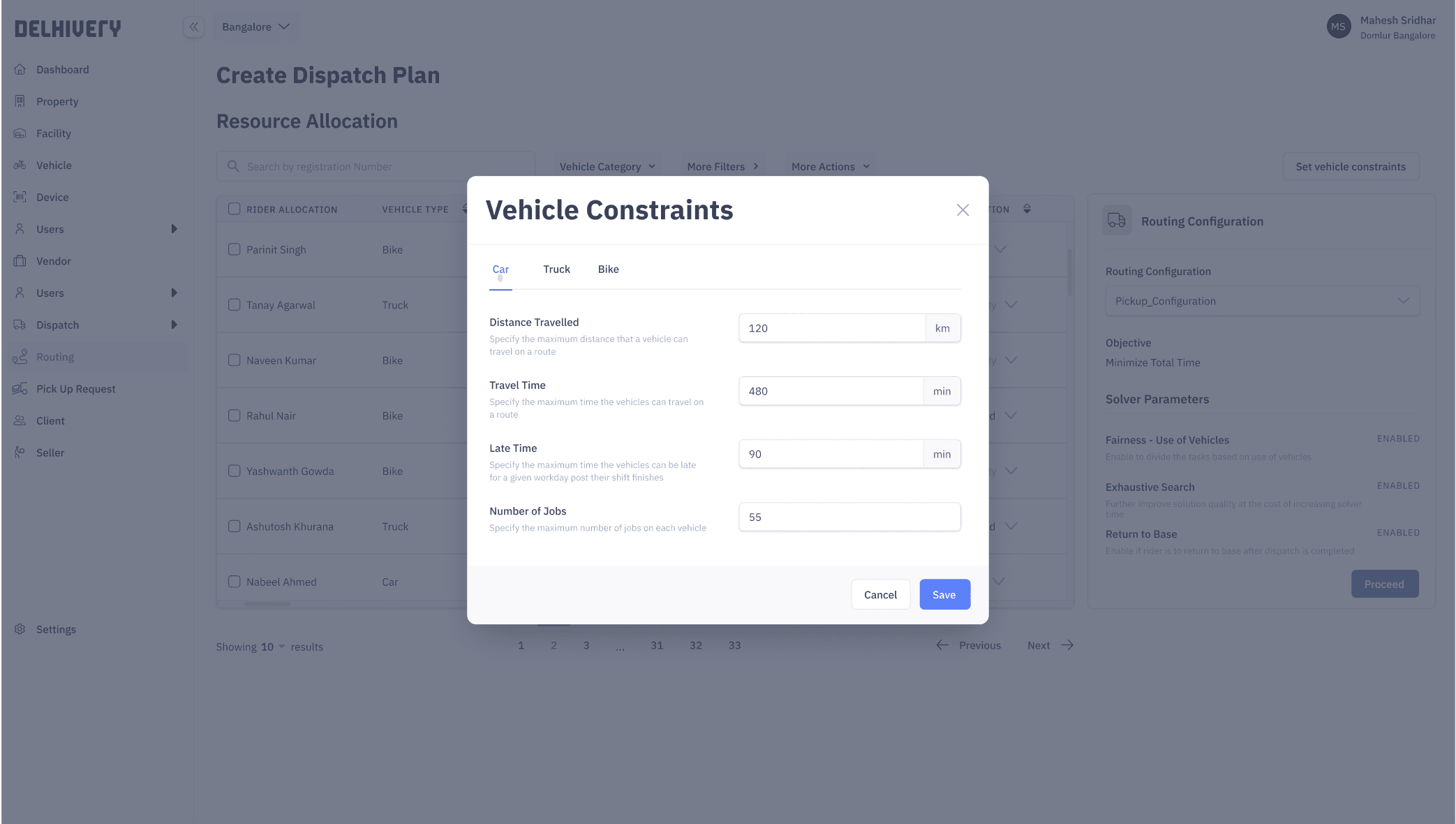
User enters vehicle constraints
User triggers the routing engine
Routing engine provides the most efficient output
User makes change to the plan, reduces unallocated jobs
User publishes the plan and ensures a successful completion.
The Screens
Creating the routing plan
The user selects a set of jobs from an overall list of jobs that need to be completed. These selected jobs are fed into the routing engine.
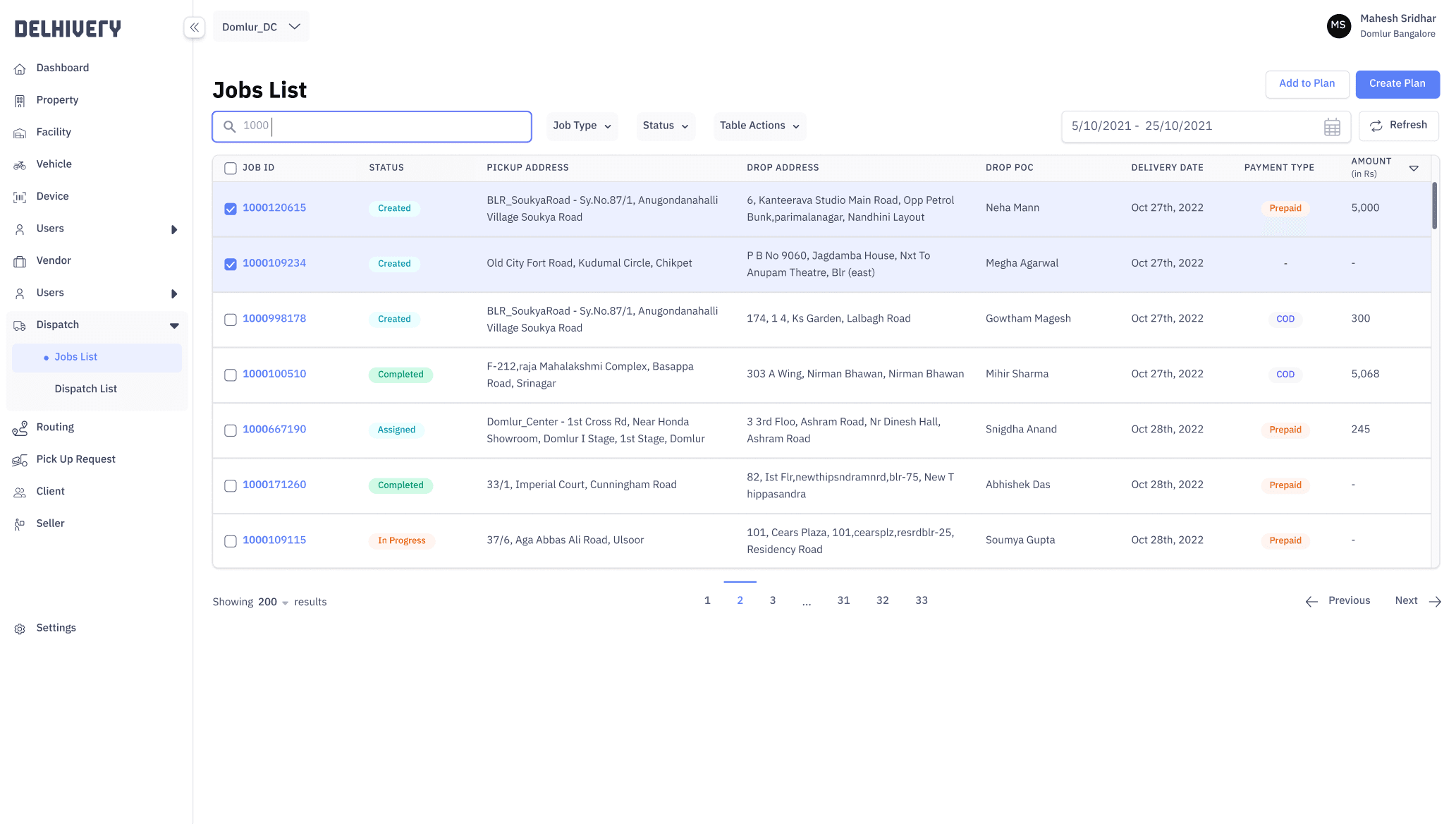
CTA to create the plan
Selected jobs
The jobs list
The user has a choice if they want to manually create a plan or use the routing engine to generate a plan.
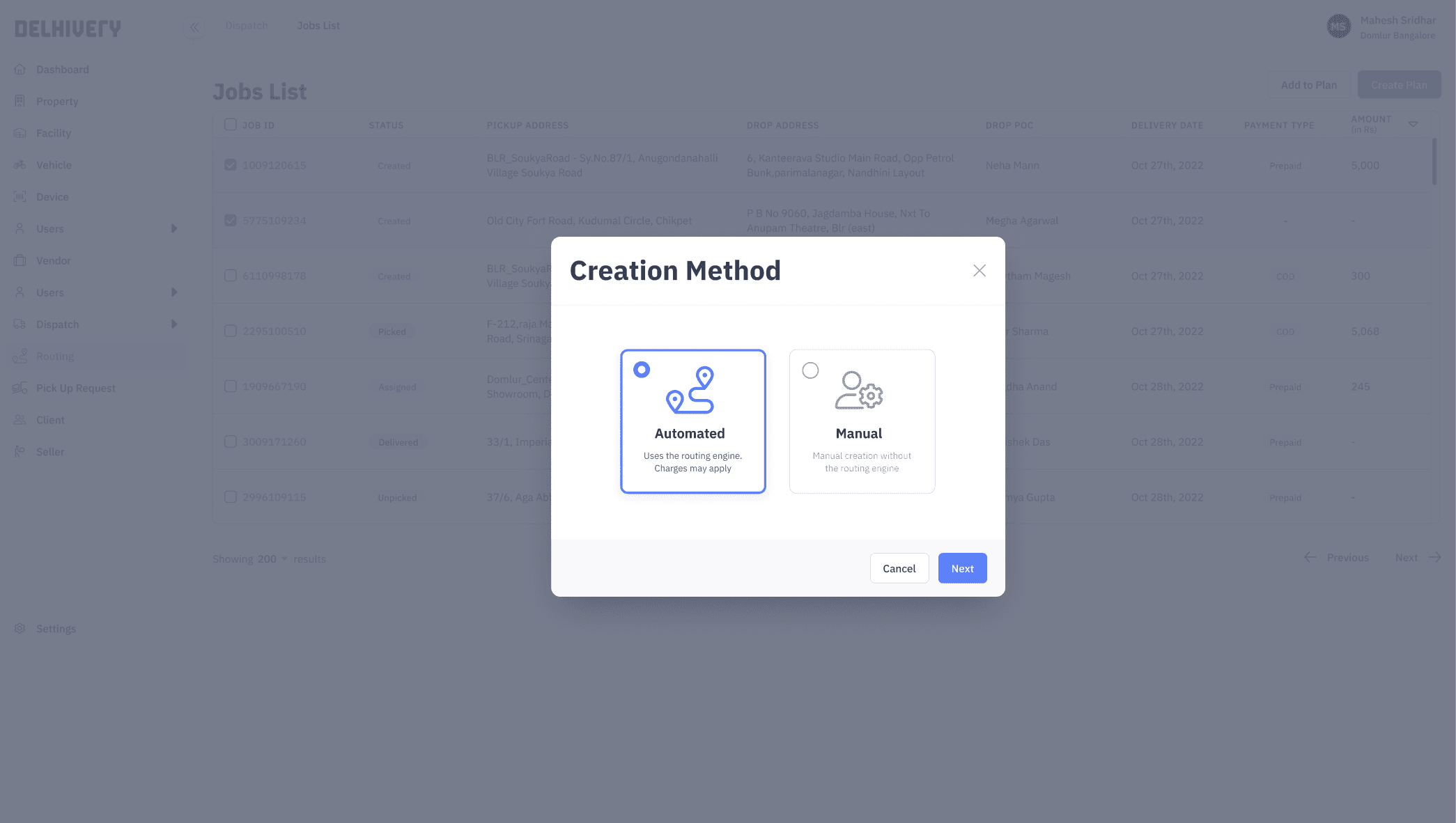
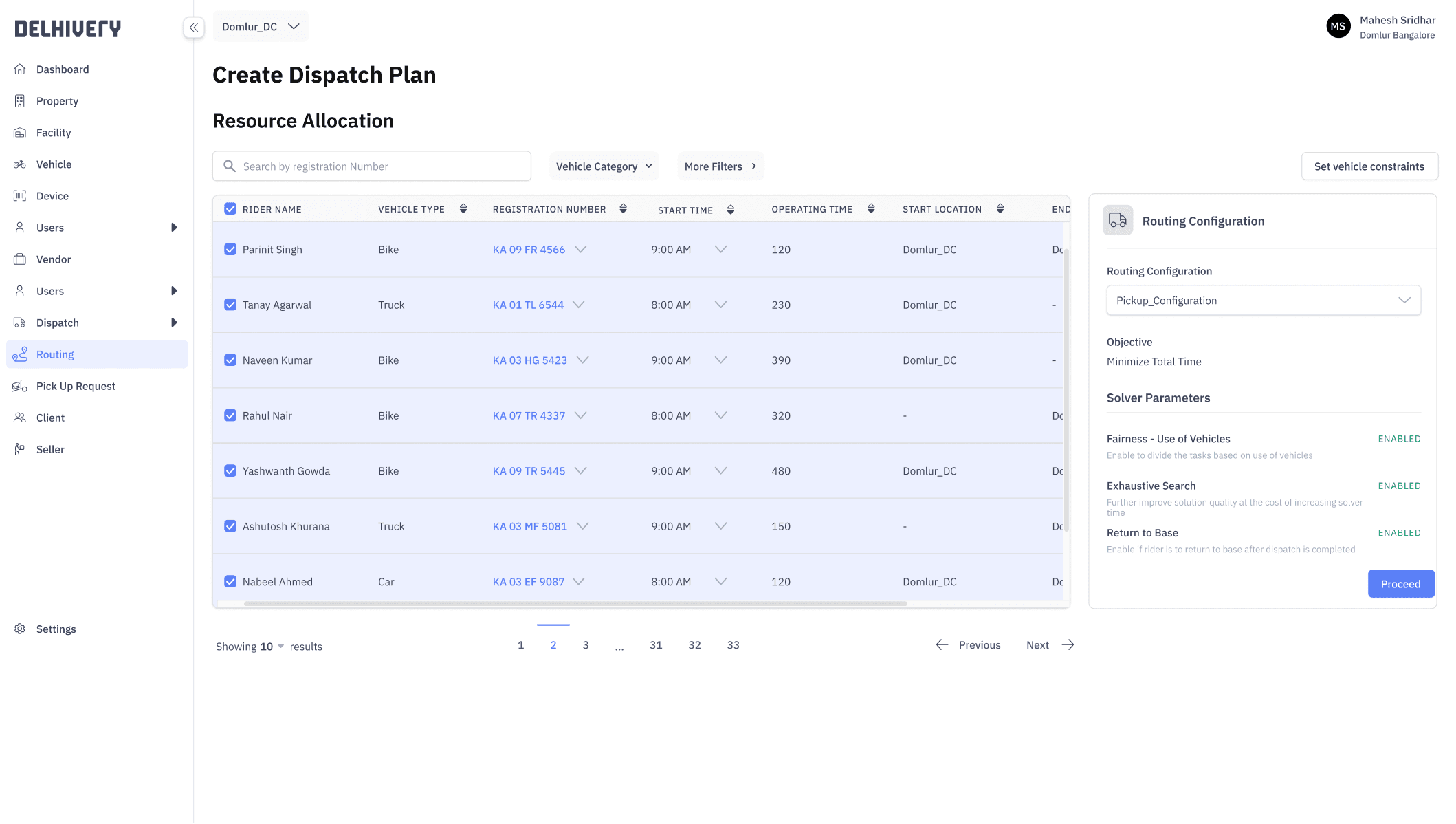
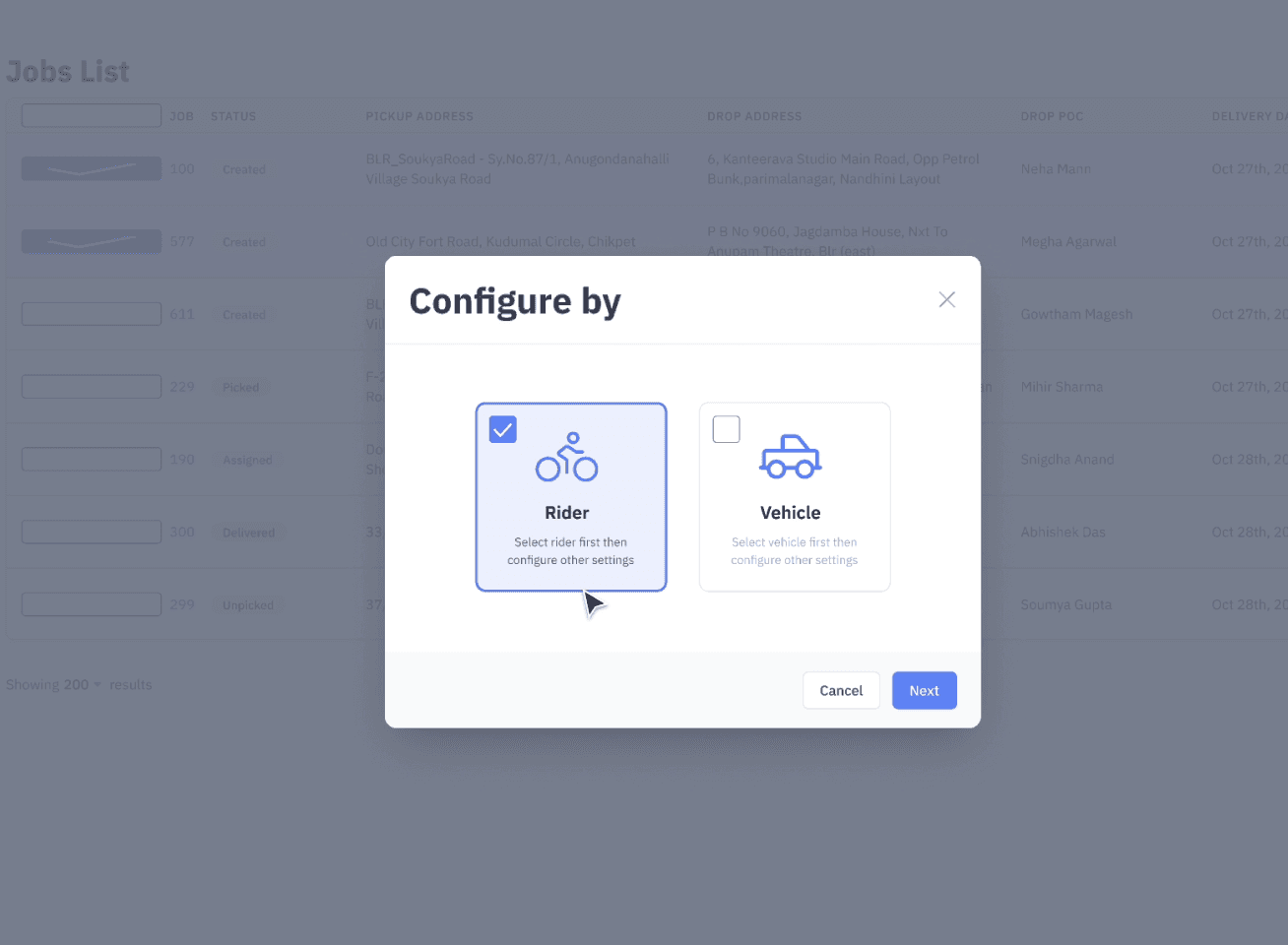
Once the user opts for the routing engine, they input the parameters and the routing configurations. They can also make any changes to the allocated resources and also input any vehicle constraints.
Allocating resources
Setting Routing Engine Configurations
The Output of the Routing Engine
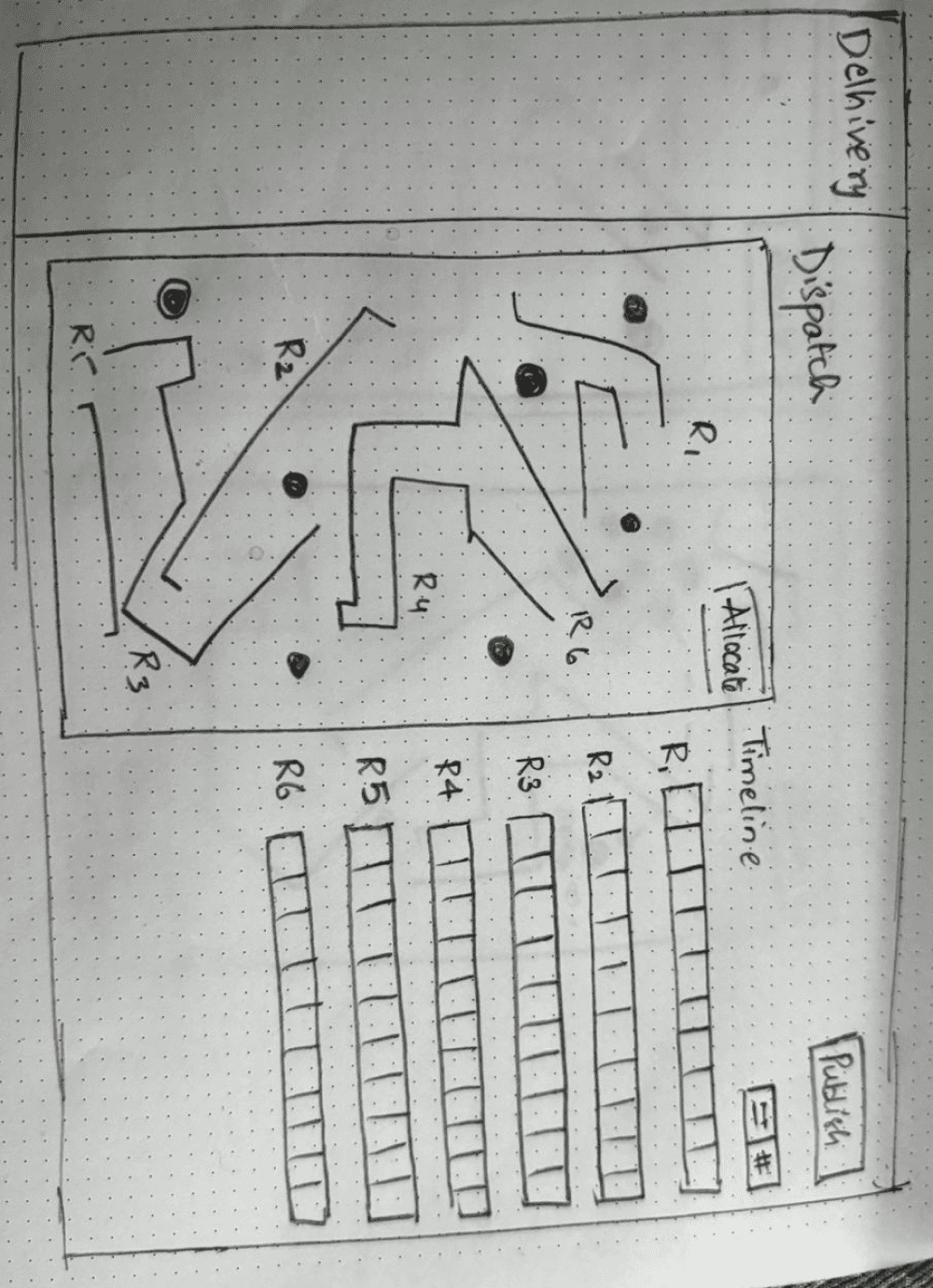
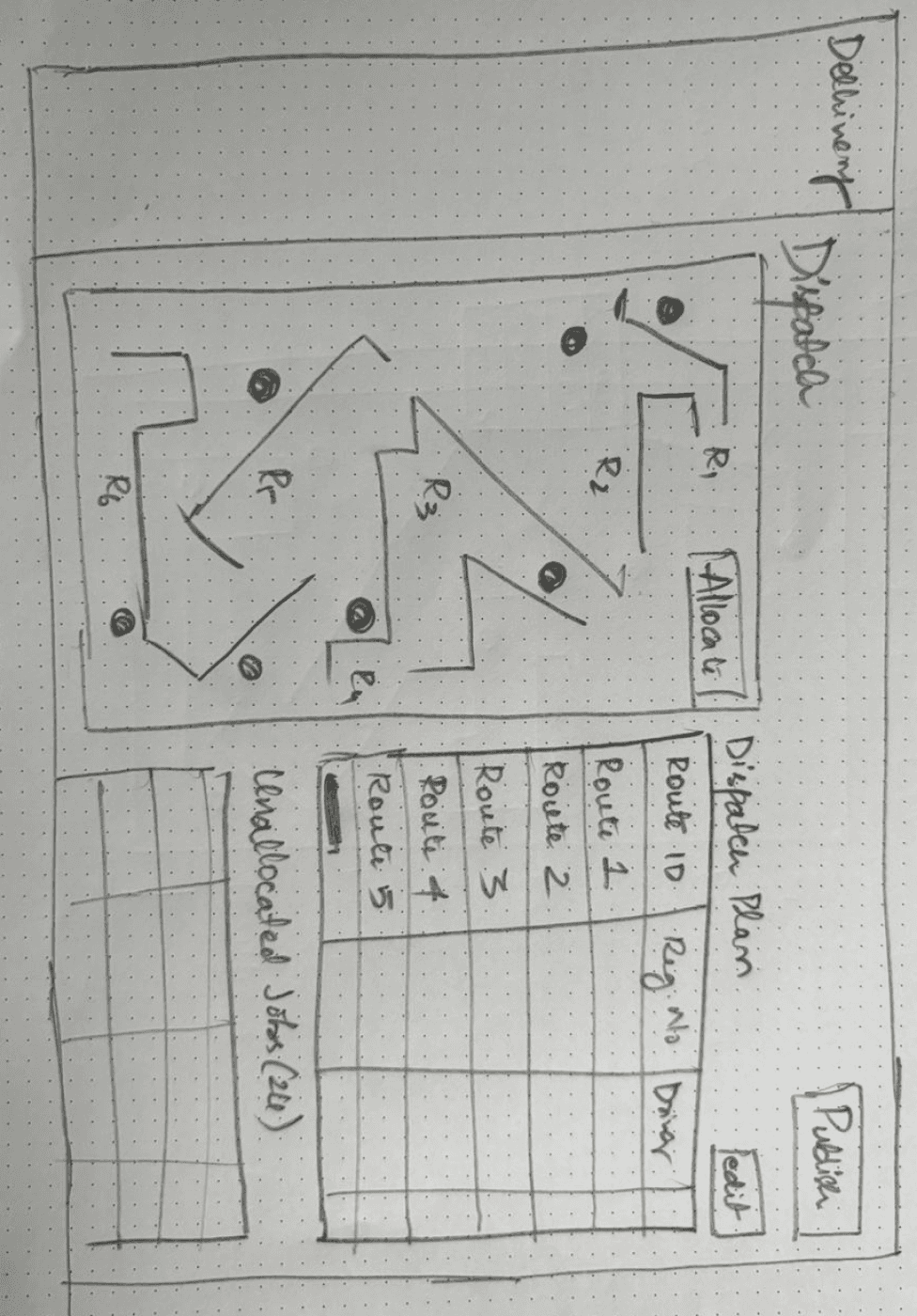
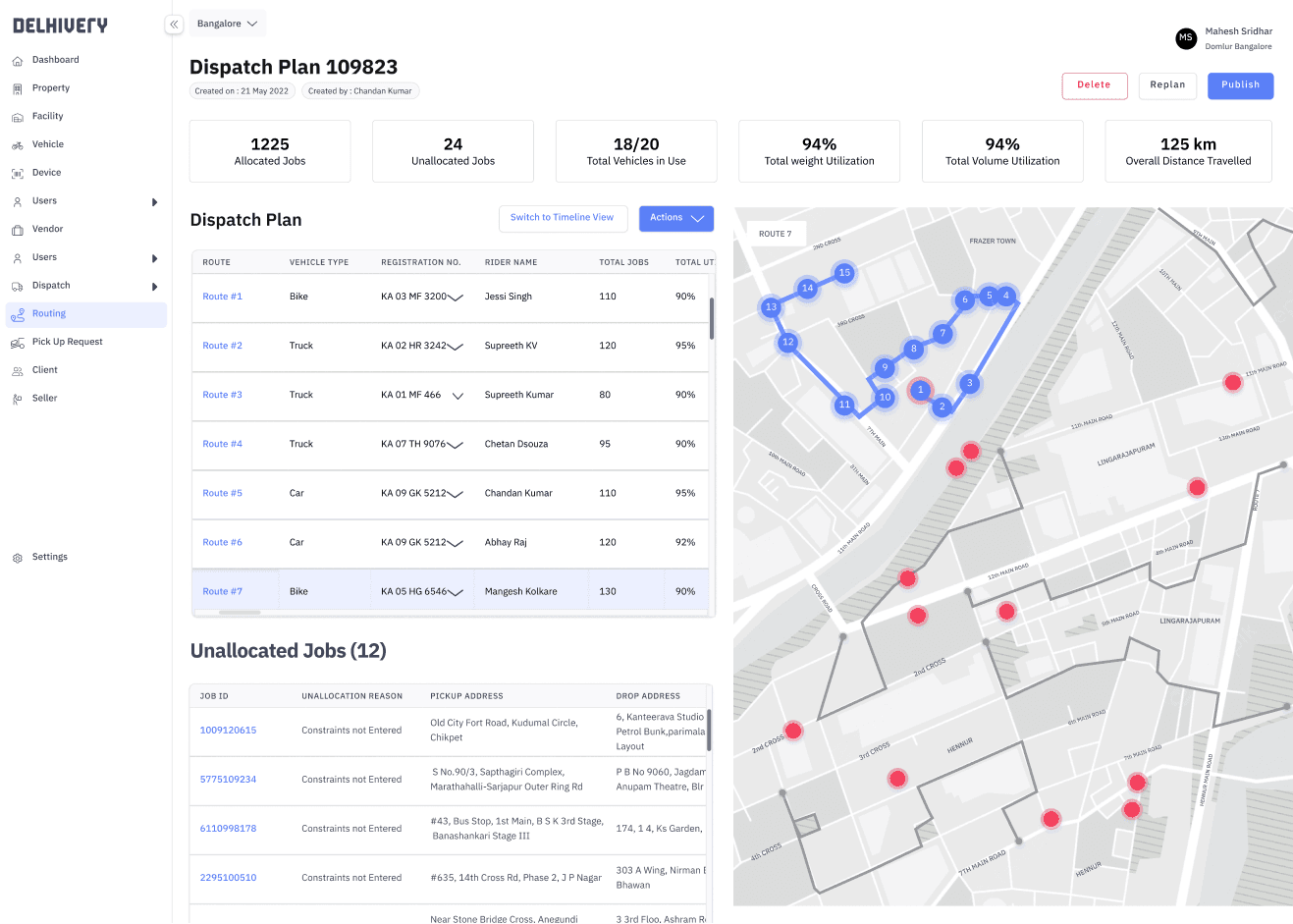
The routing engine clubs the selected jobs and provides a suggested output with the most efficient use of resources. The plan is still not published however, the user can make any changes they wish to and then can publish the plan.
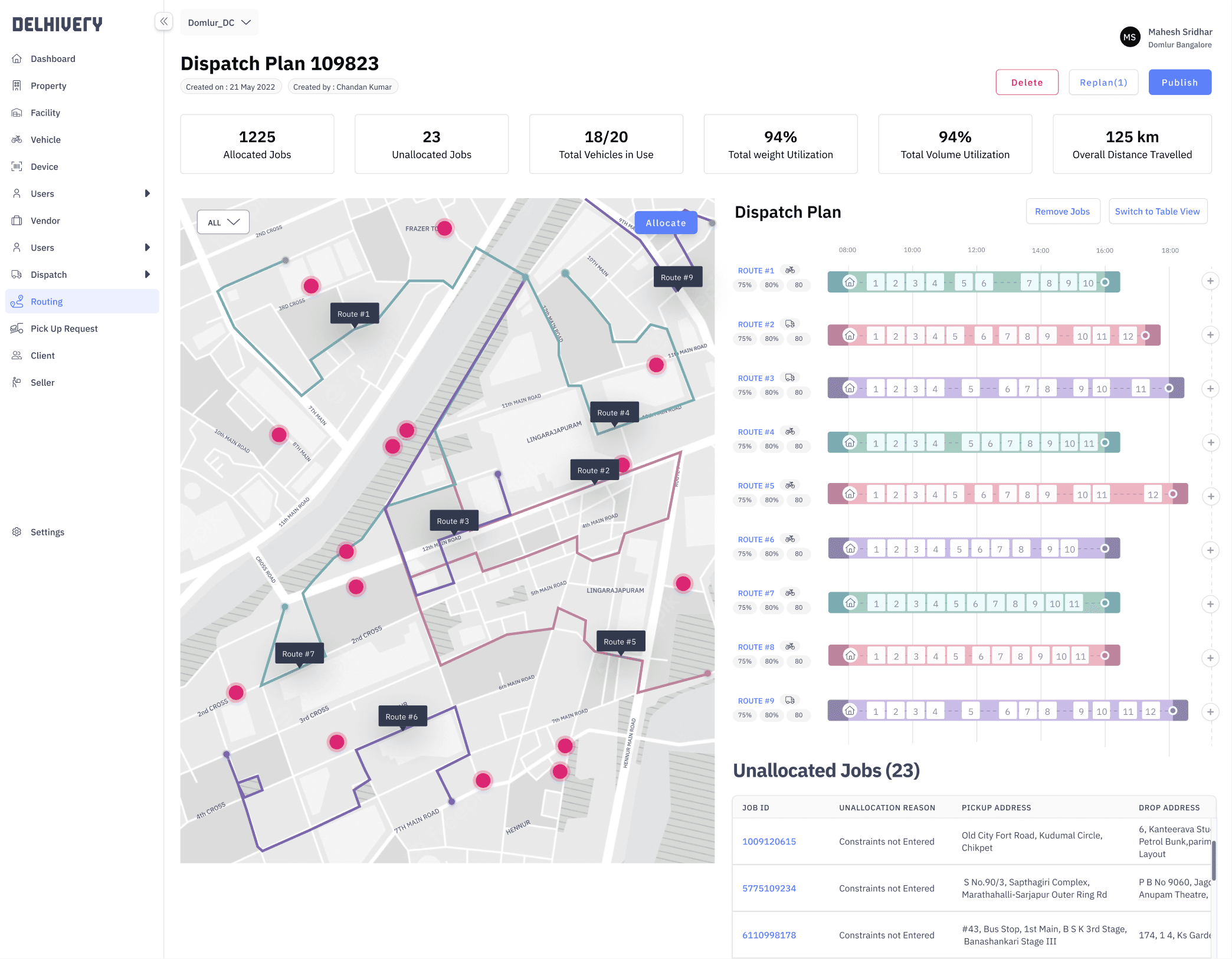
Unallocated Jobs
Timeline View
Routes
Unallocated Jobs
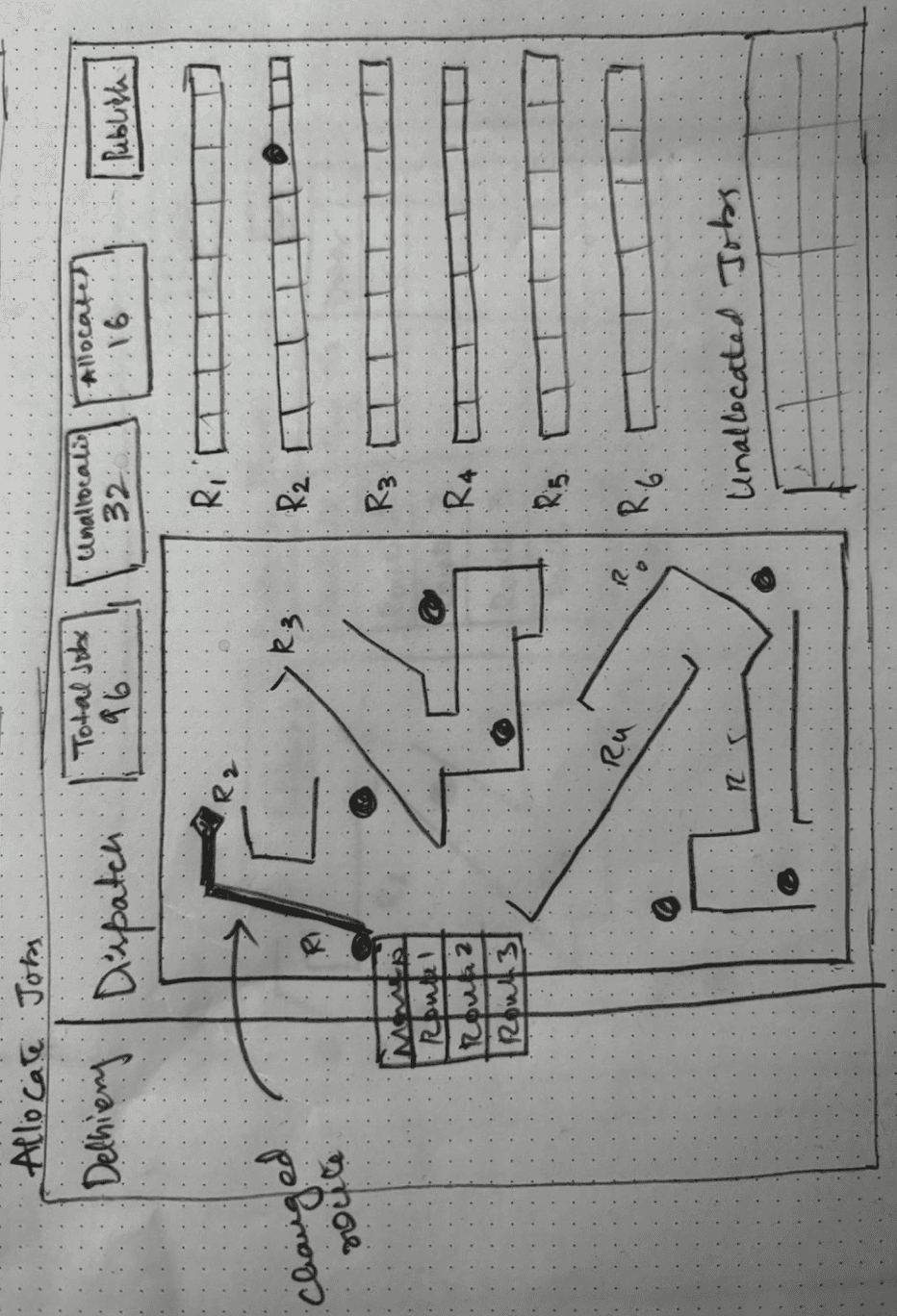
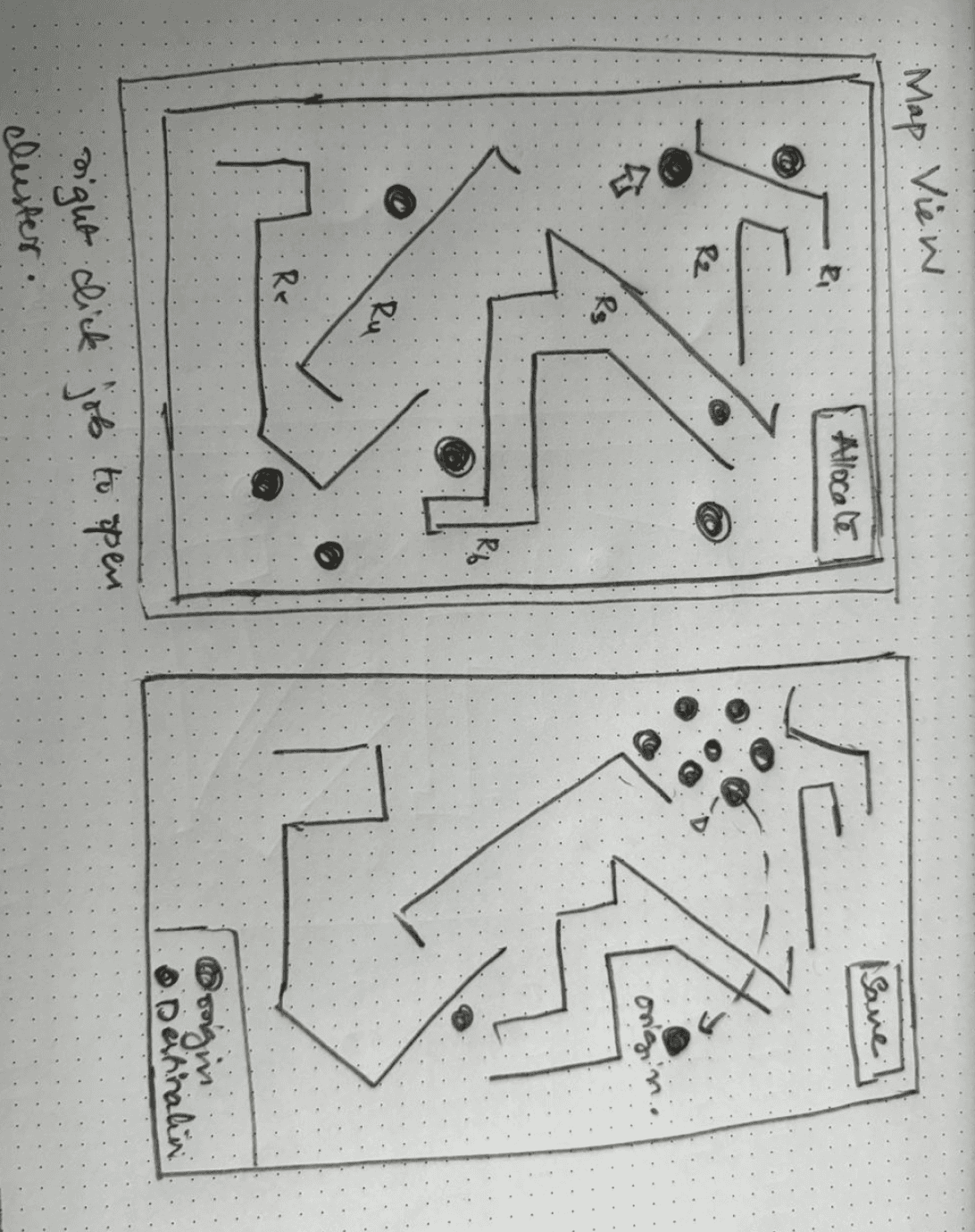
The dots depict the unallocated jobs, that are not allocated by the engine due to any constraint mismatch. The user resolves these constraints and adds these jobs to the most efficient route.
The user can quickly add and remove jobs from the map as well as the timeline.
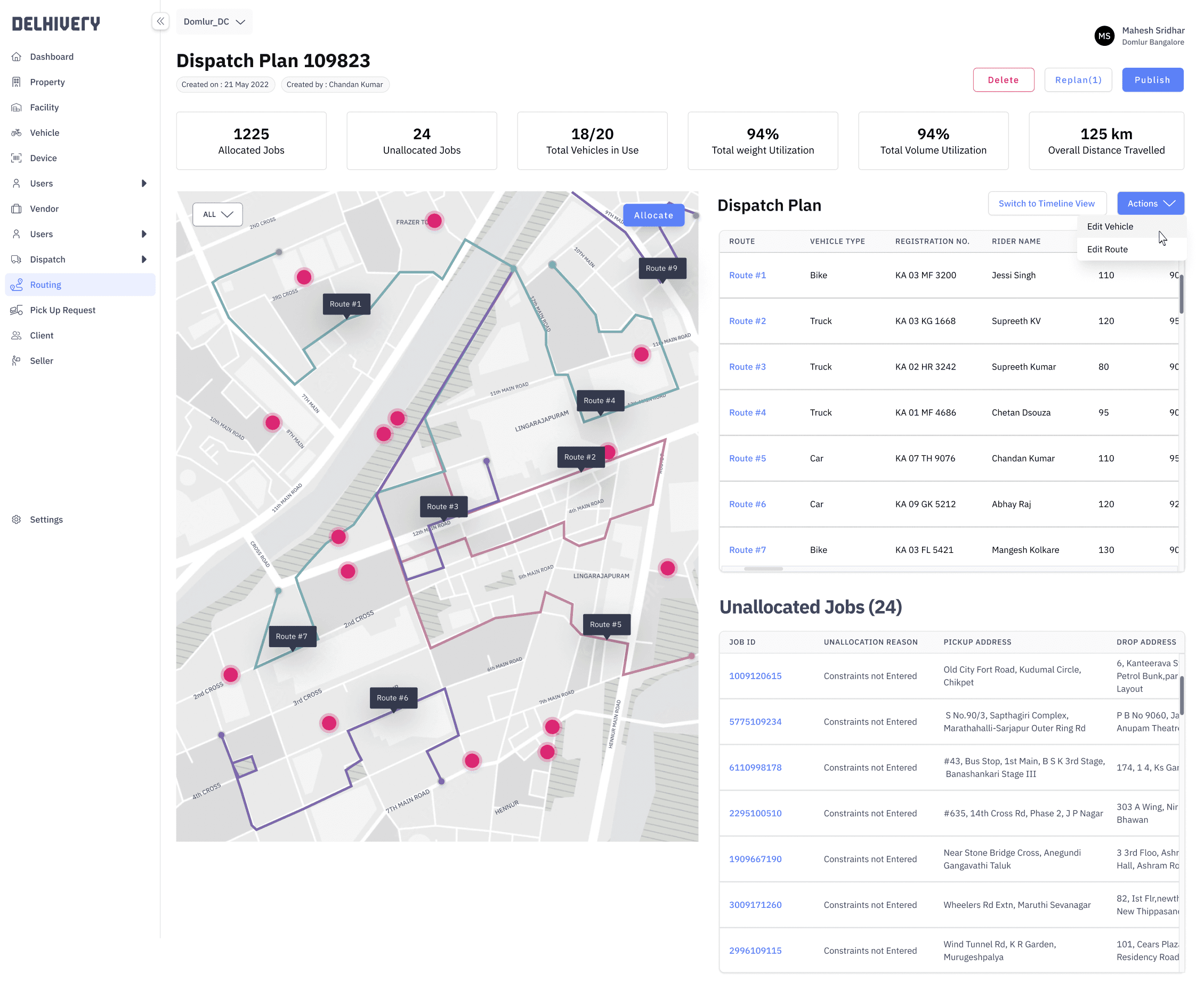
User can edit the resource allocation
Table View
Adding jobs to optimize the output
A job can remain unallocated due to many reasons, like any constraint mismatch. If any constraint fails, the routing engine fails to allocate that particular job to the route and it joins the heap of unallocated jobs.
Adding jobs through the timeline
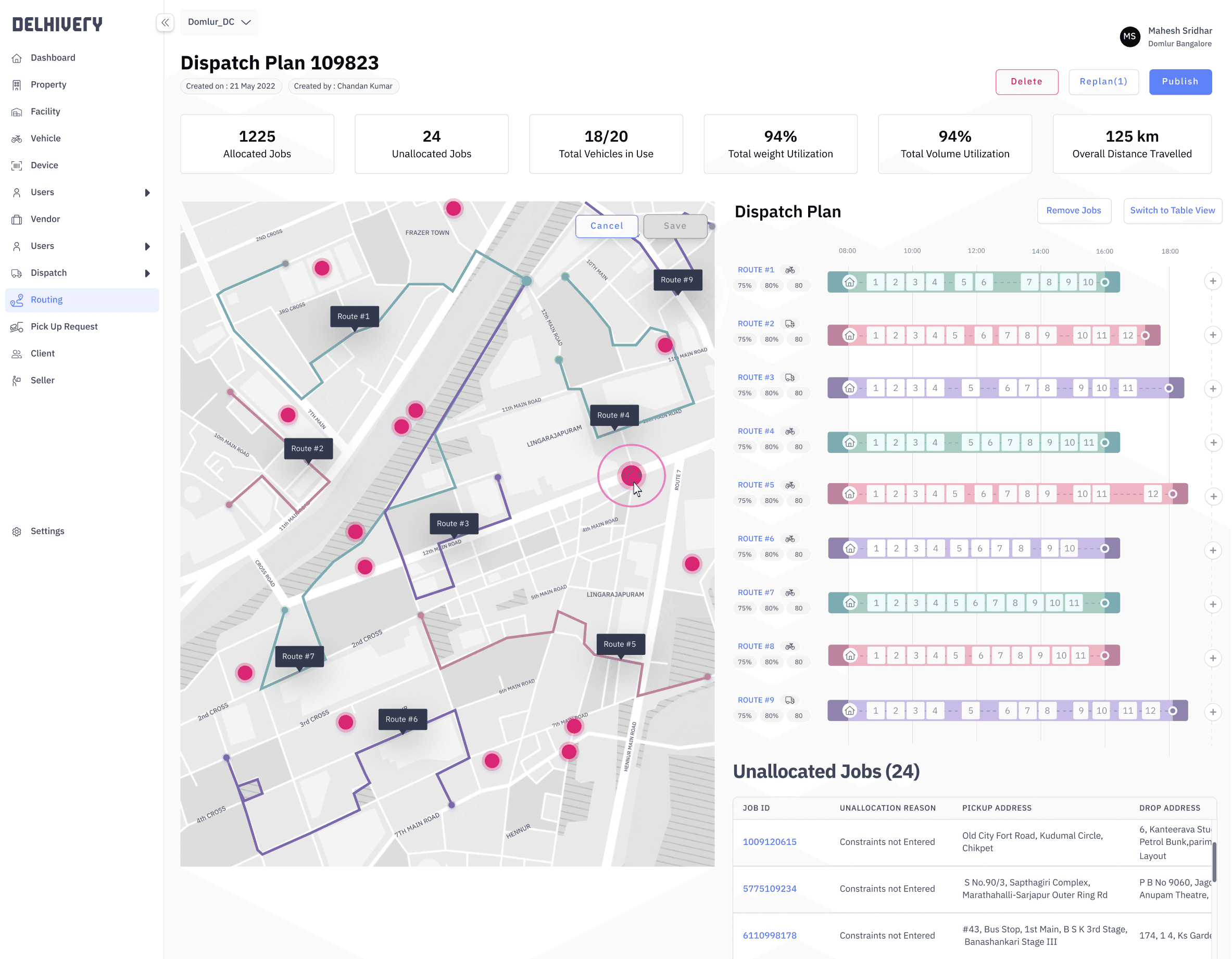
The user has to reduce the number of unallocated jobs to enhance the output of the routing engine. Each route is depicted separately on the timeline. The user can either can click on the ‘+’ icon next to each route in the timeline to add jobs.
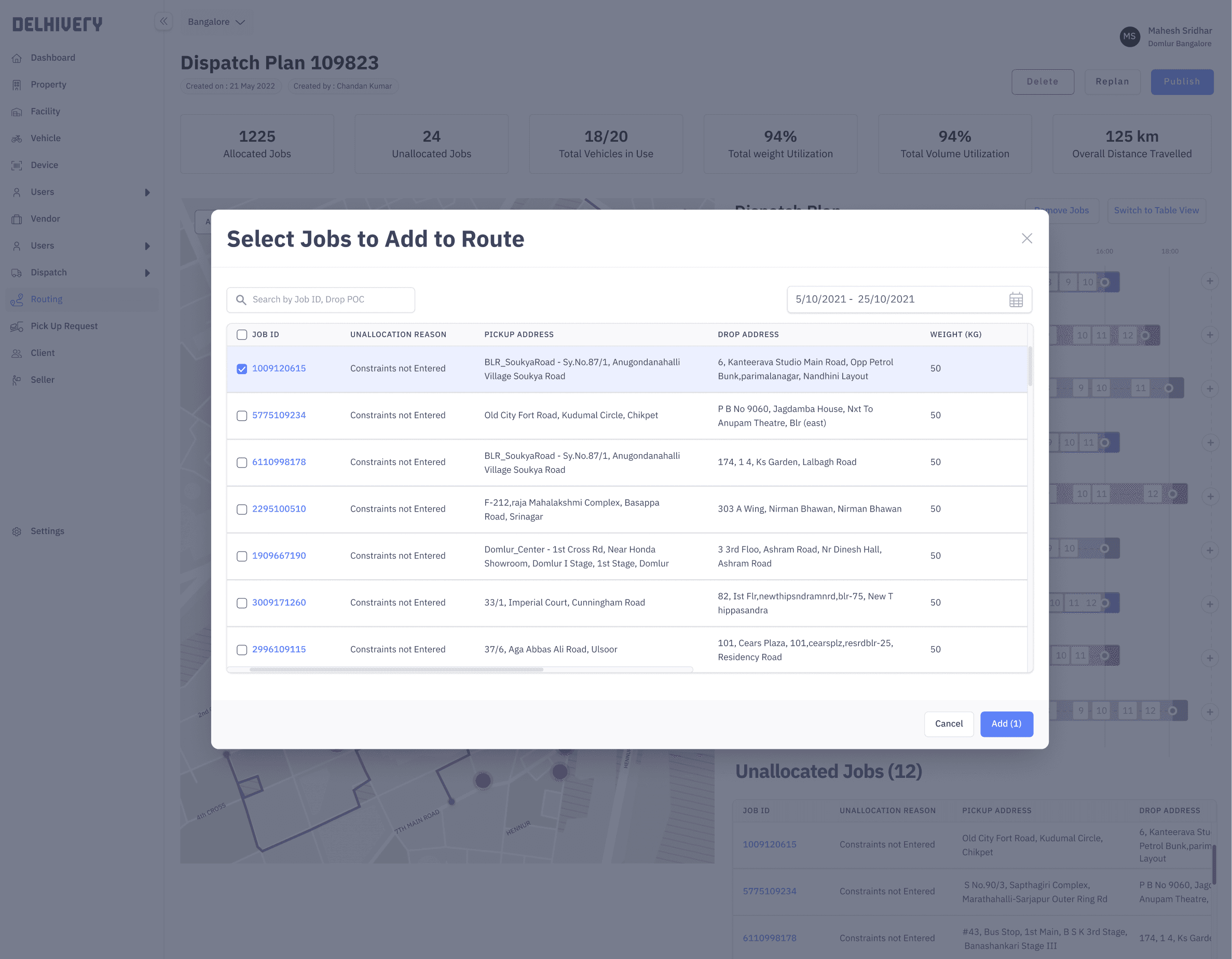
List of unallocated Jobs
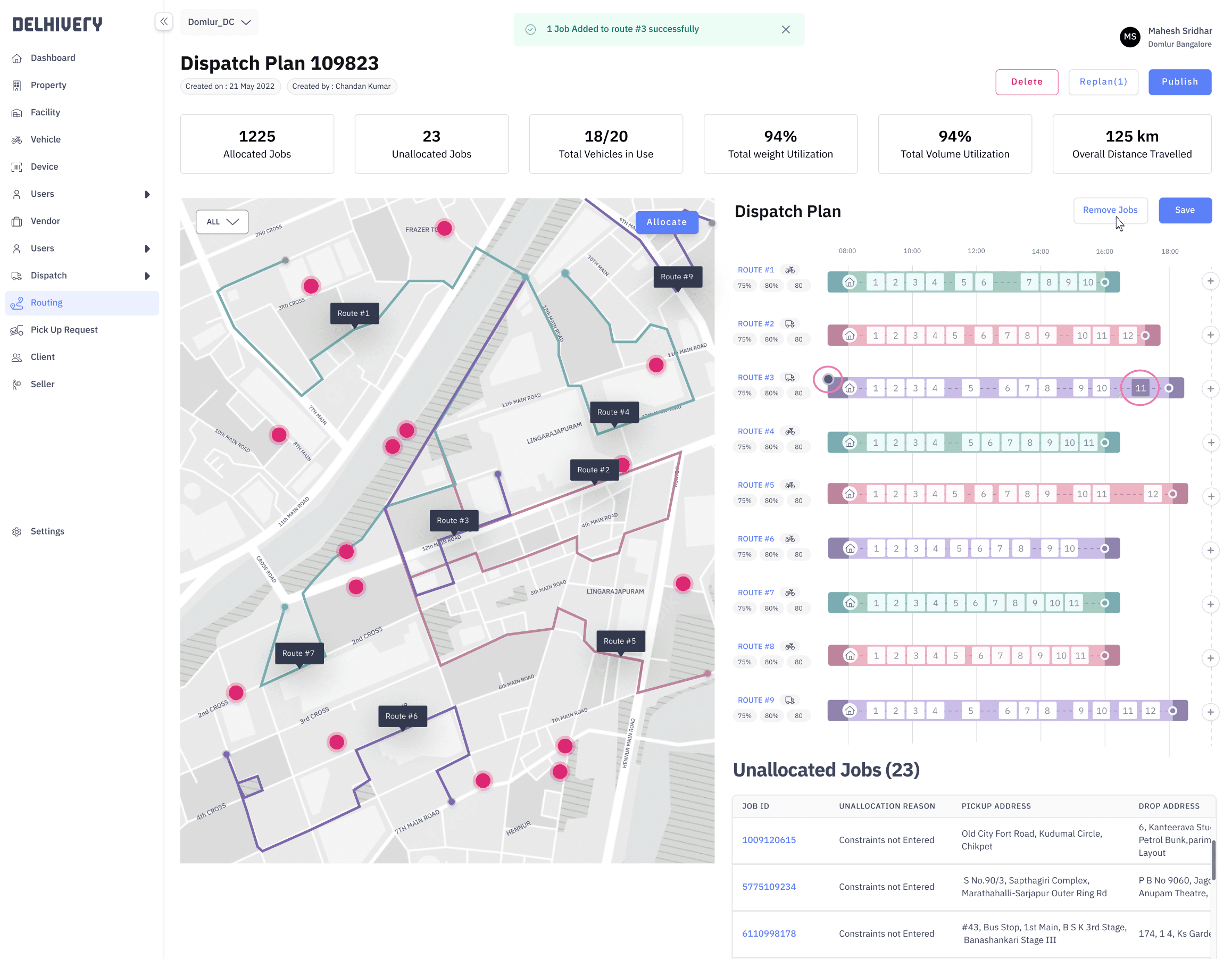
edited route
The selected job is added to the route. The modified route is is depicted on the map and the timeline.
Adding jobs through the map
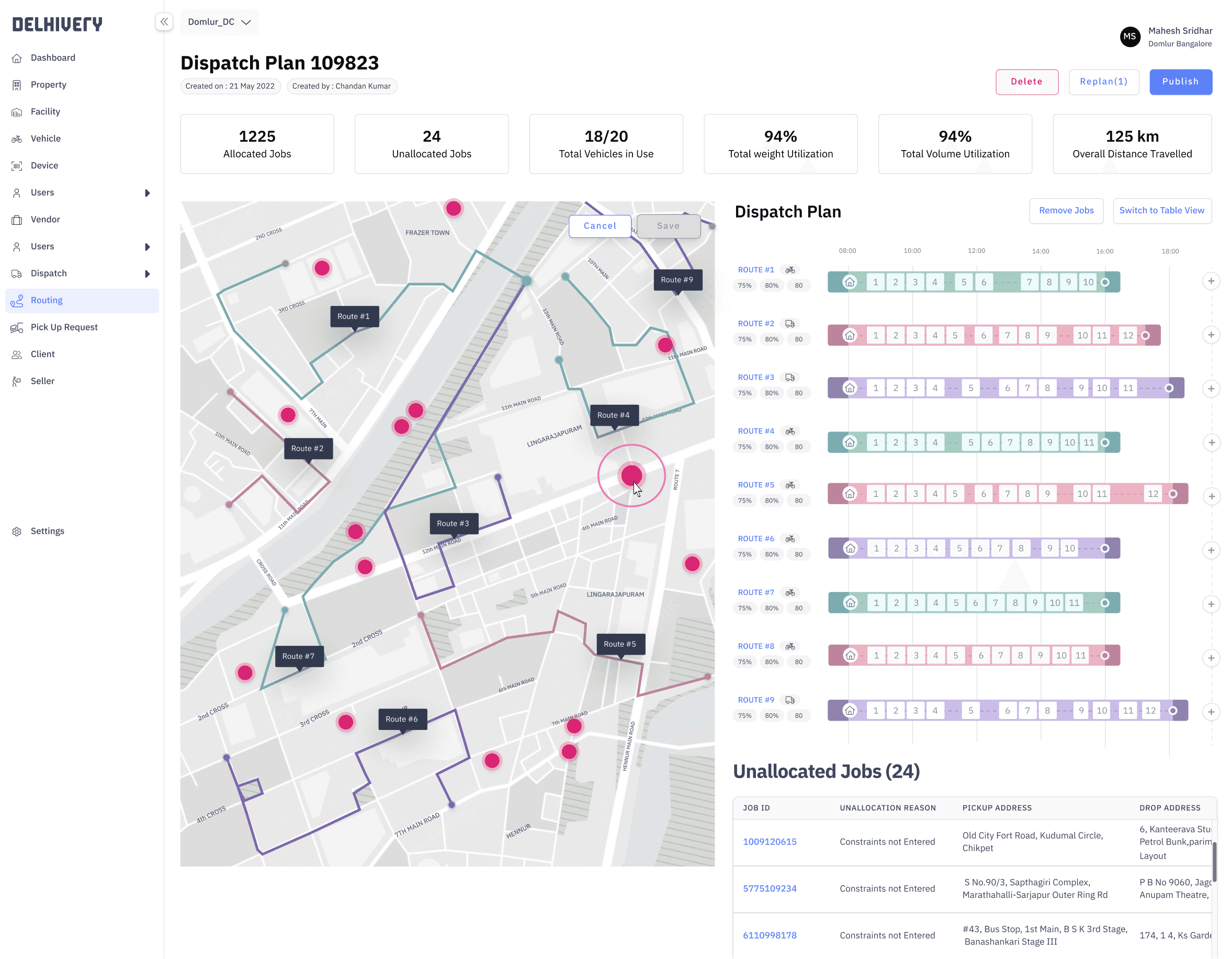
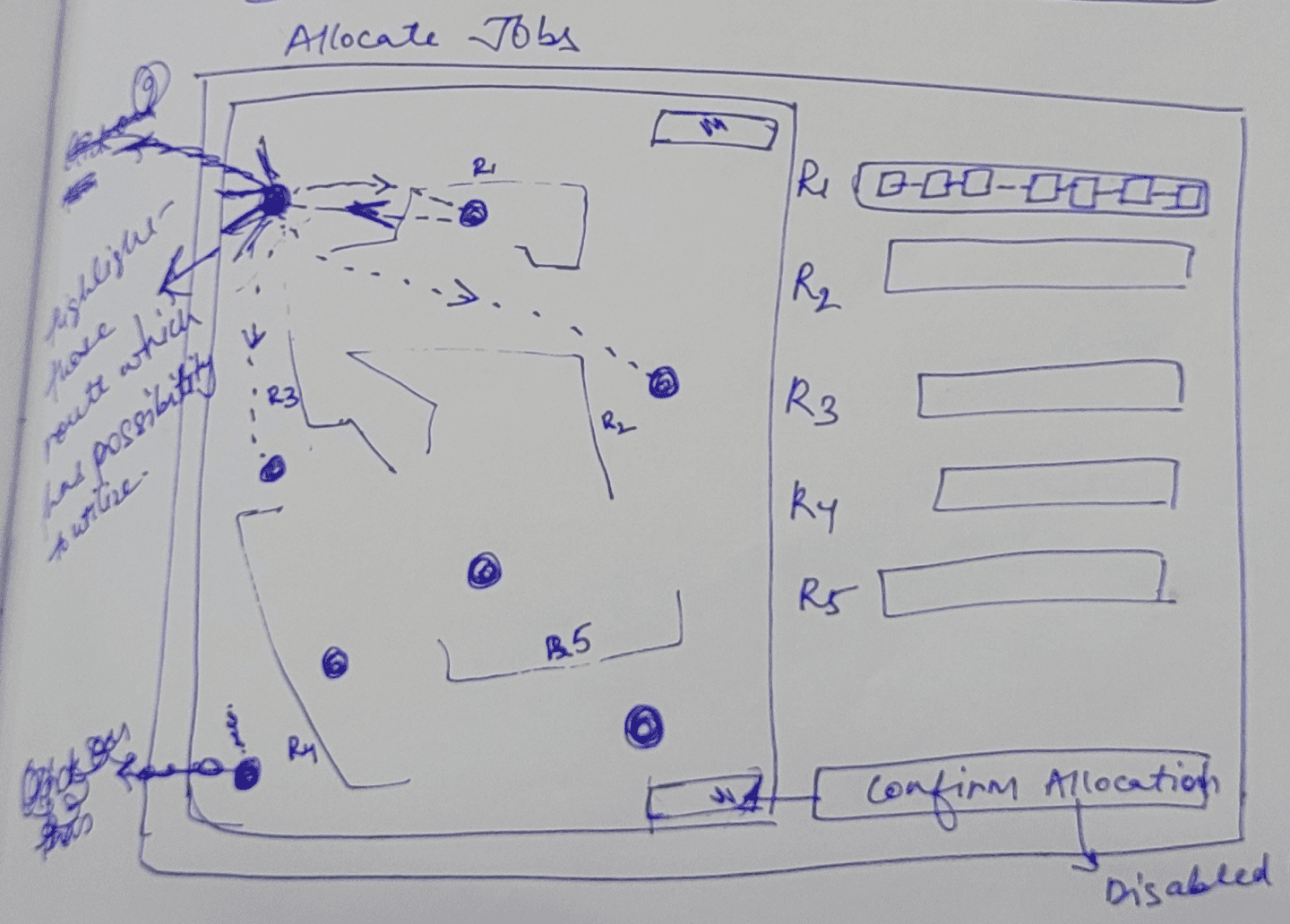
The user can also add jobs through the map. The dots represent a cluster, or a group of unallocated jobs around the same area. Clicking on one of the clusters further opens up the set of unallocated jobs grouped in it.
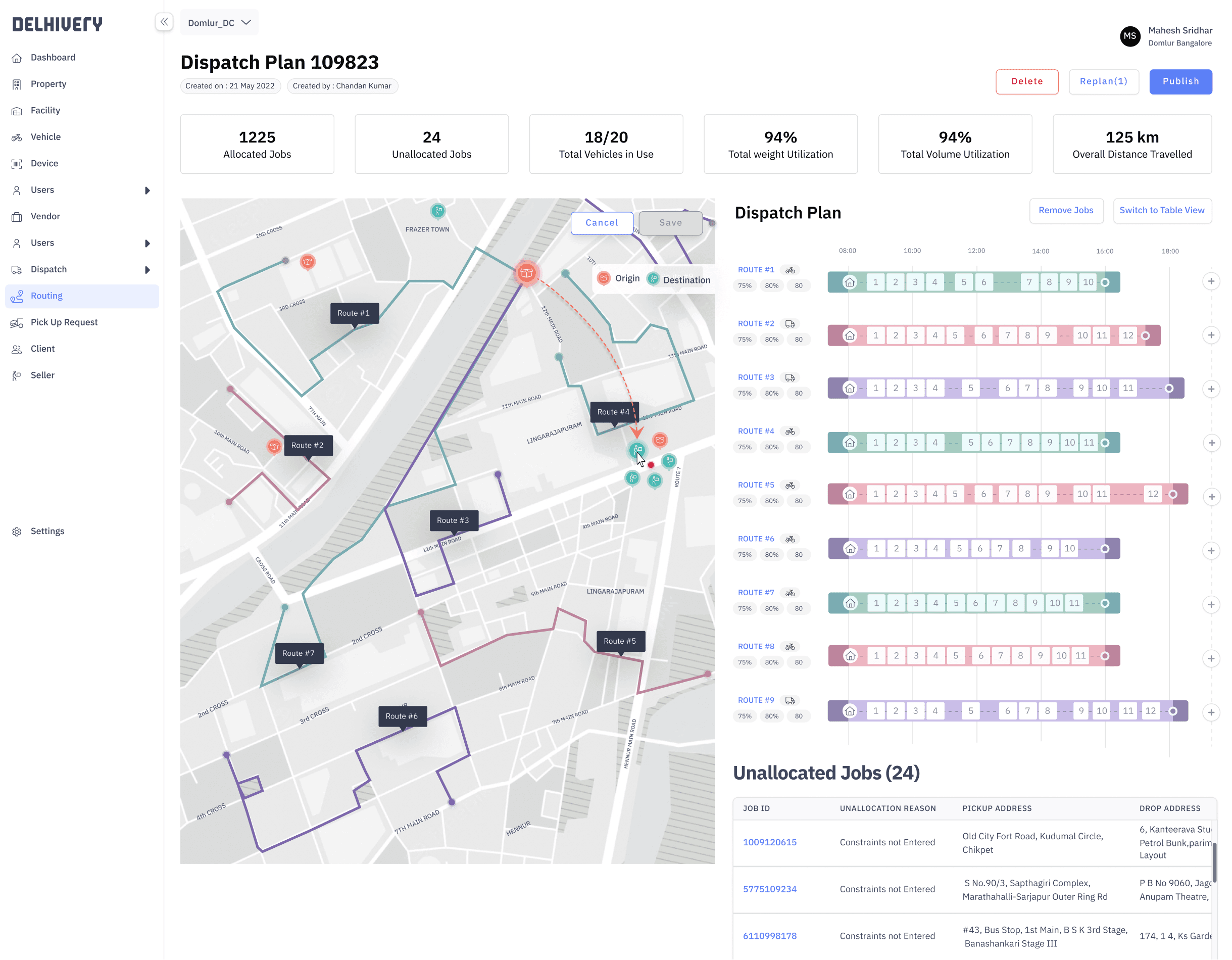
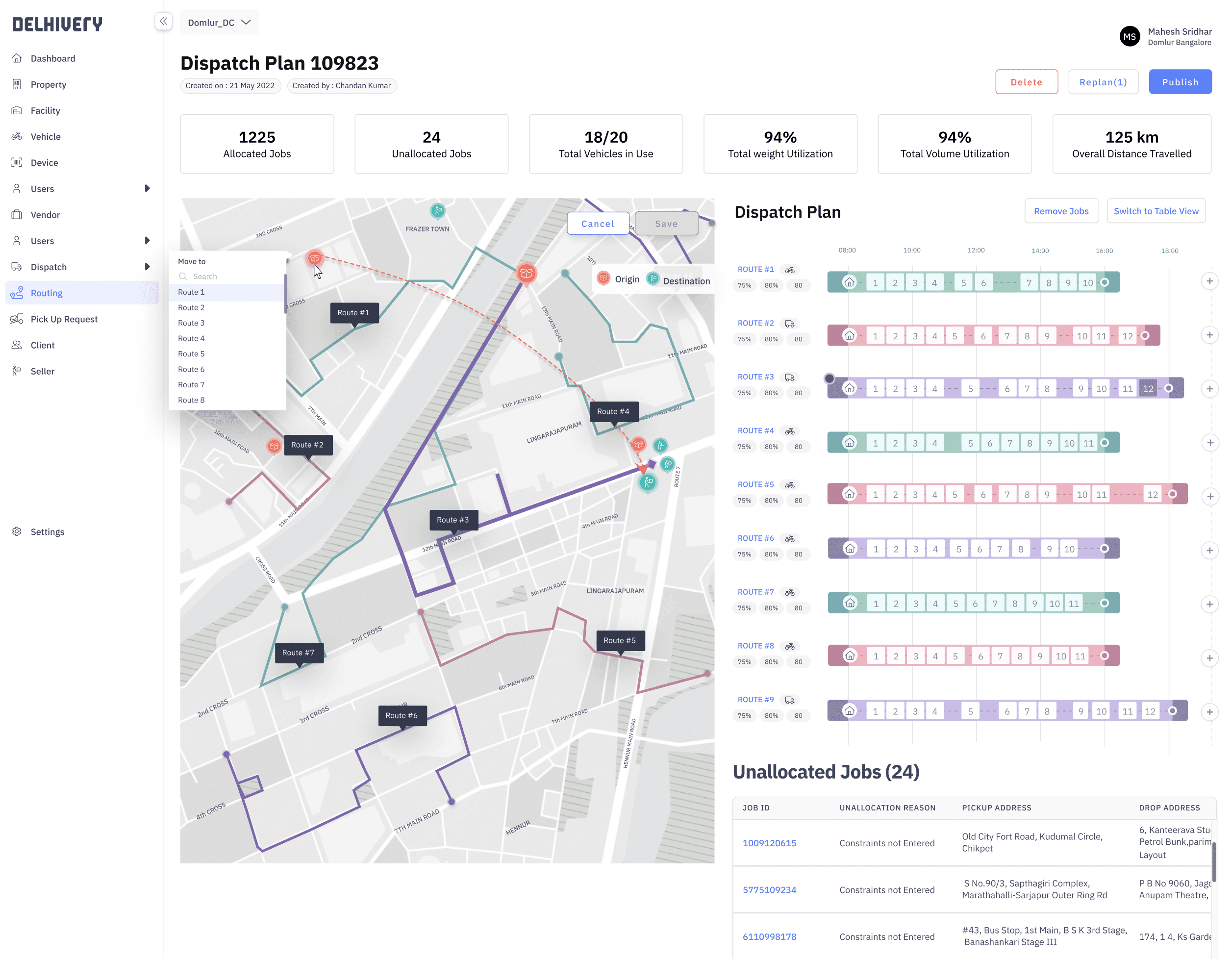
Each job is connected via an origin and destination. After solving the constraint, the user can add the job to the most fitting route.
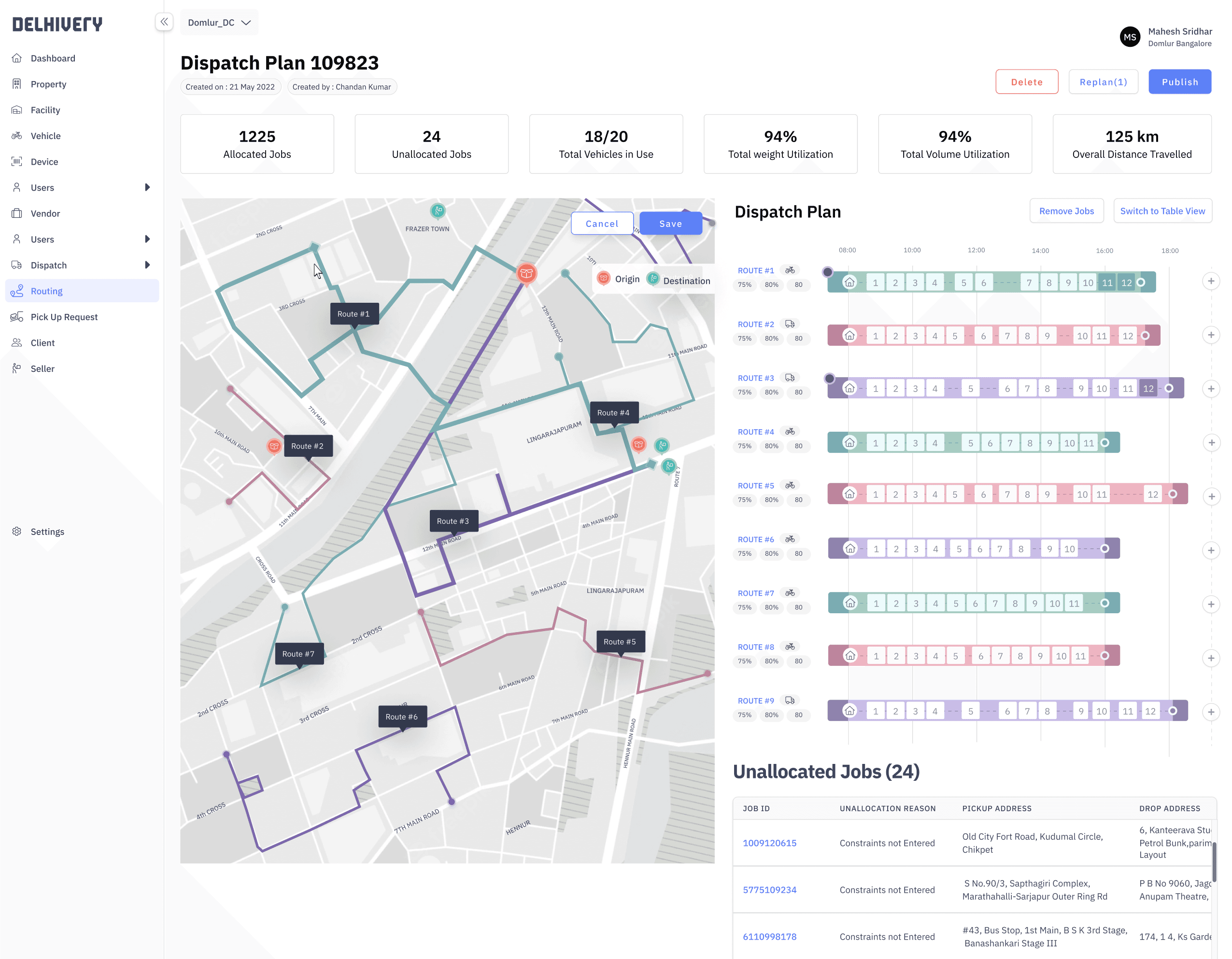
The selected job is added to the route and the modified route is is depicted on the map and the timeline.
The user can continue adding jobs and save the plan after all changes have been made. After all changes have been made, they can publish the plan.
Stuff that didn’t work
(no designers were hurt in the making of this)
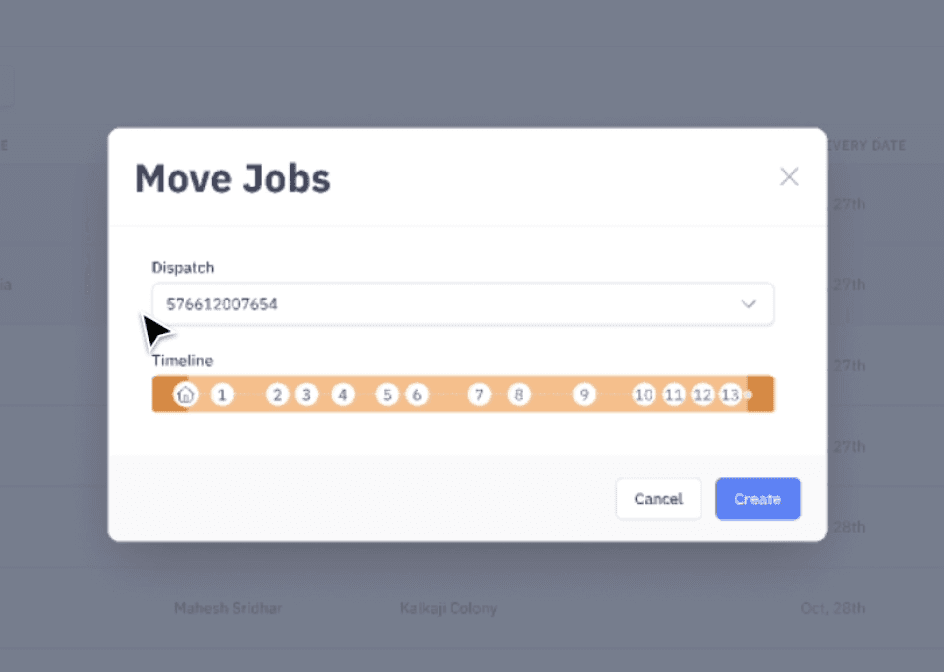
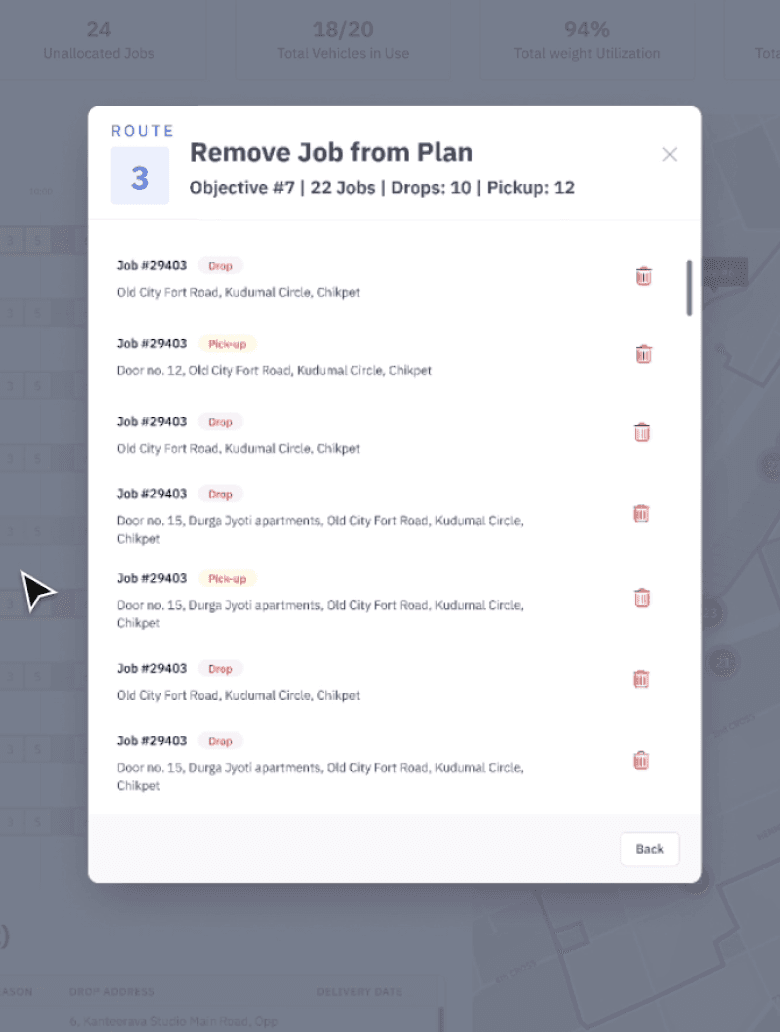
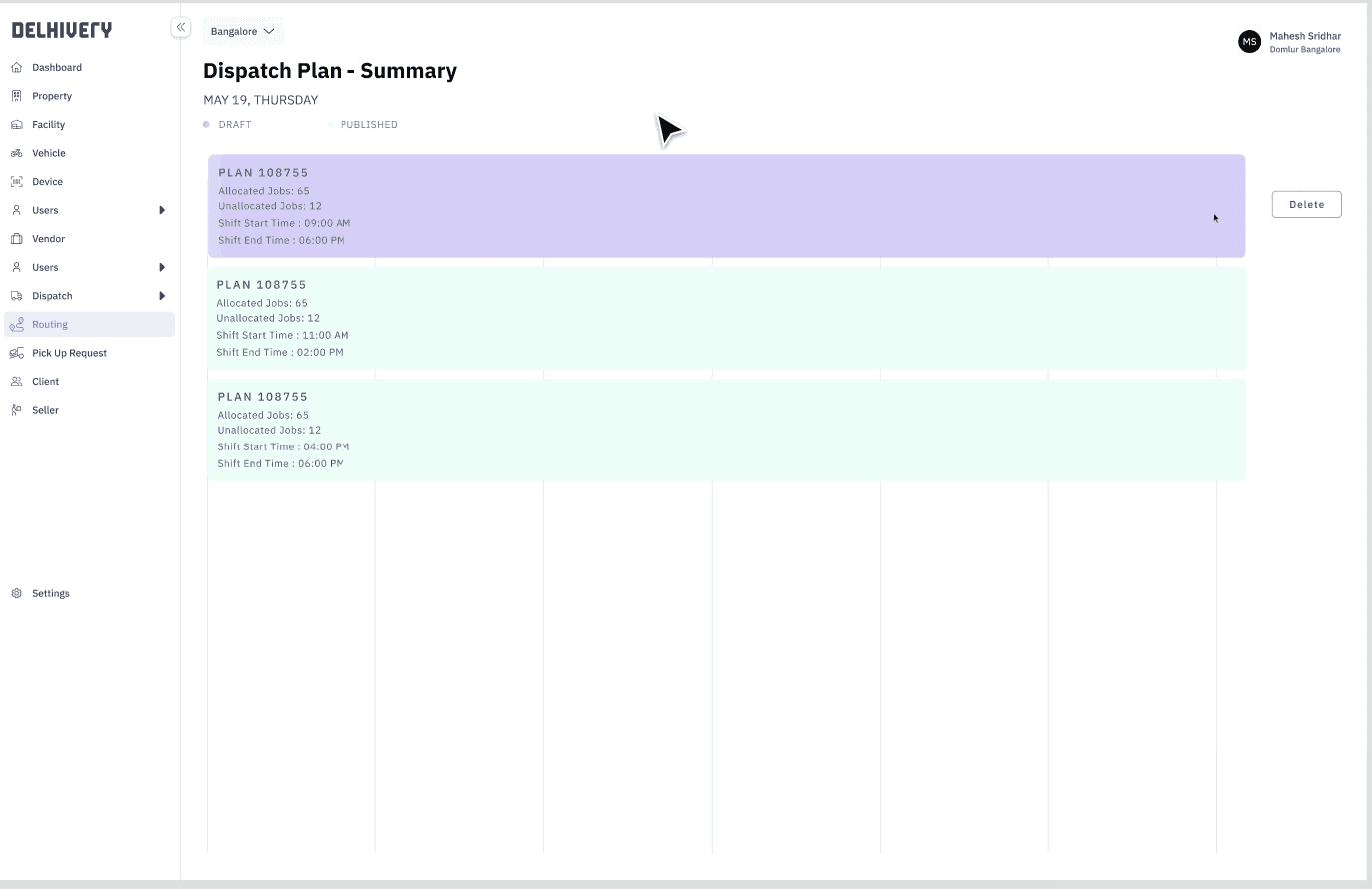
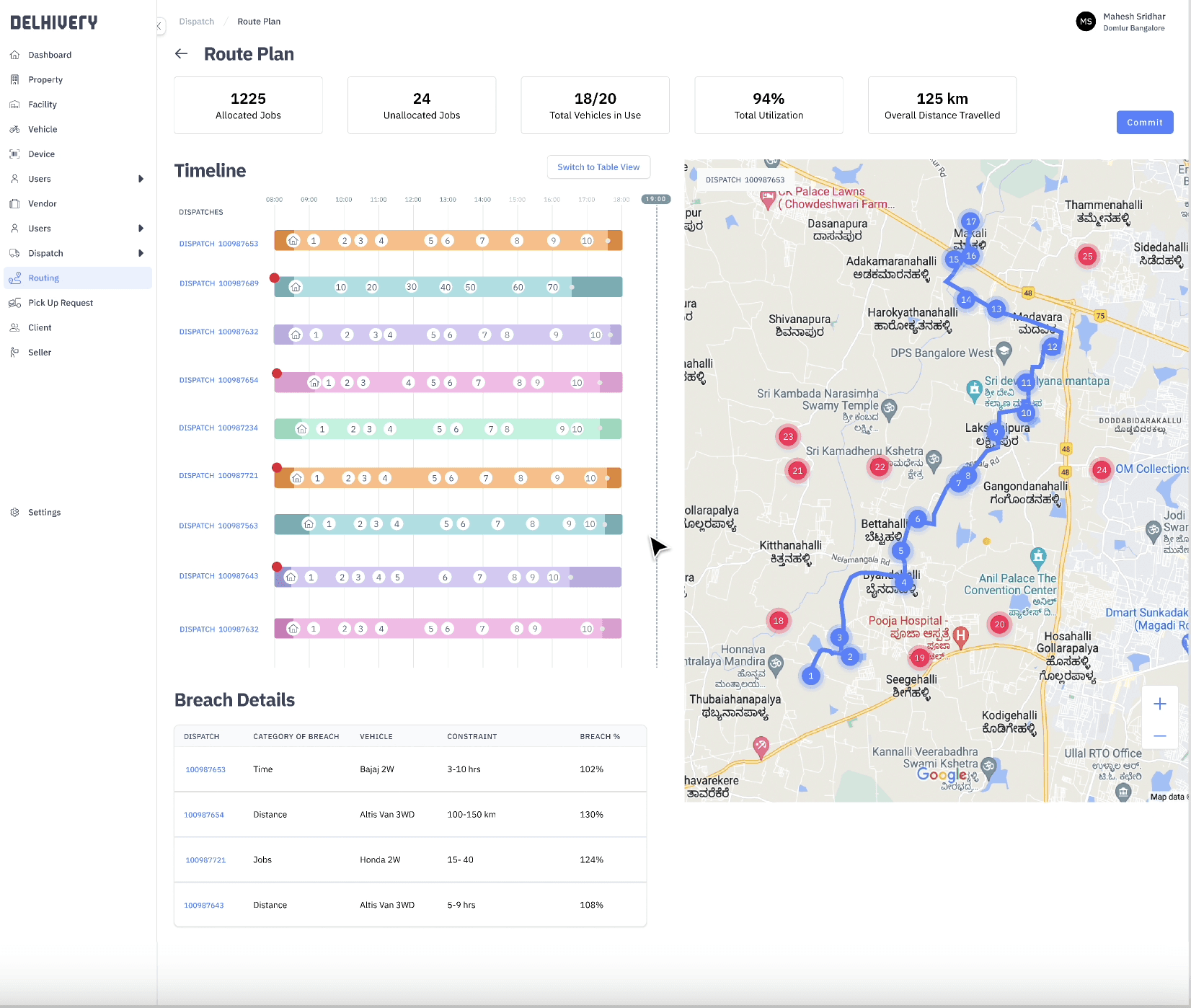
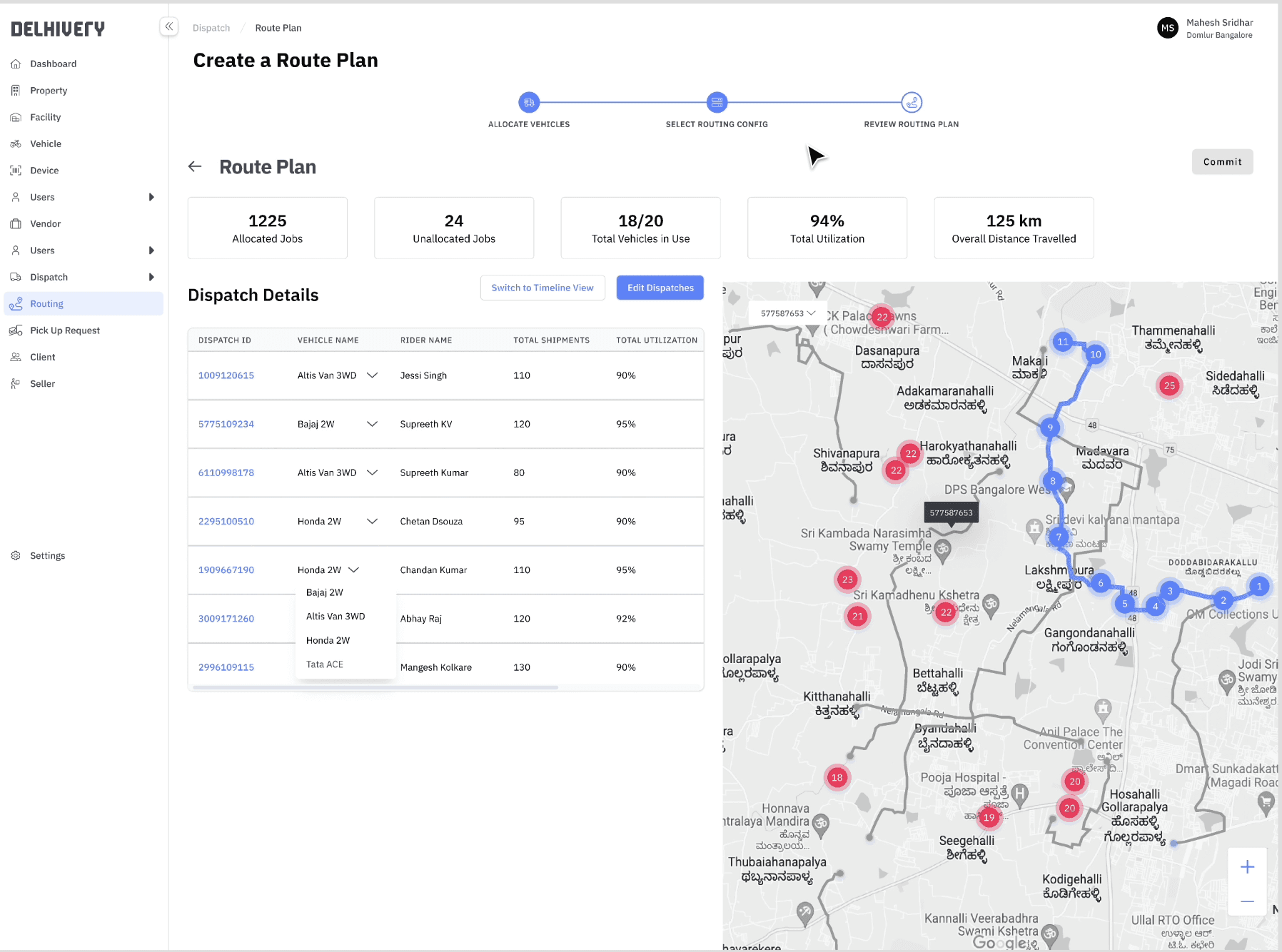
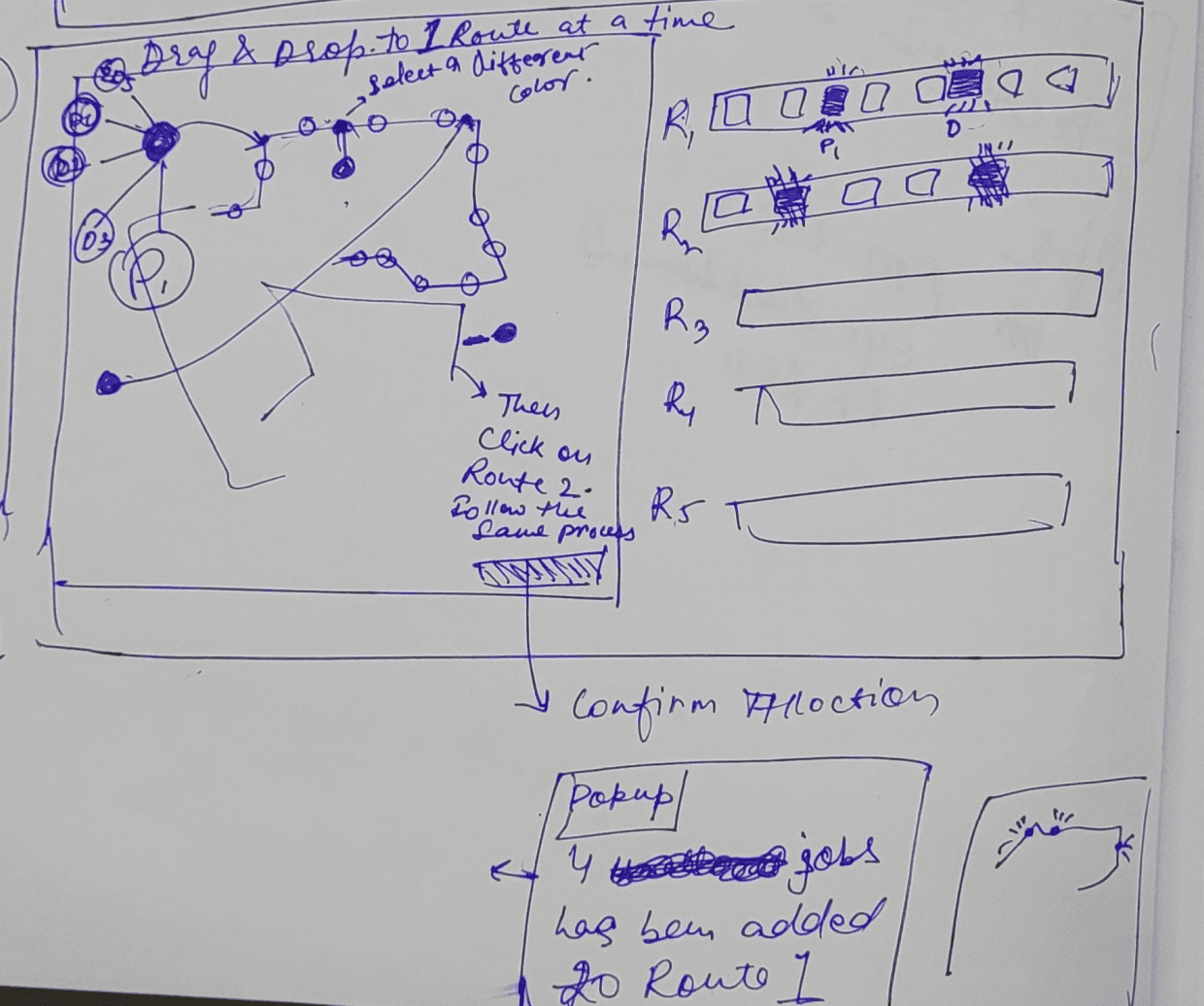
different iterations for the timeline
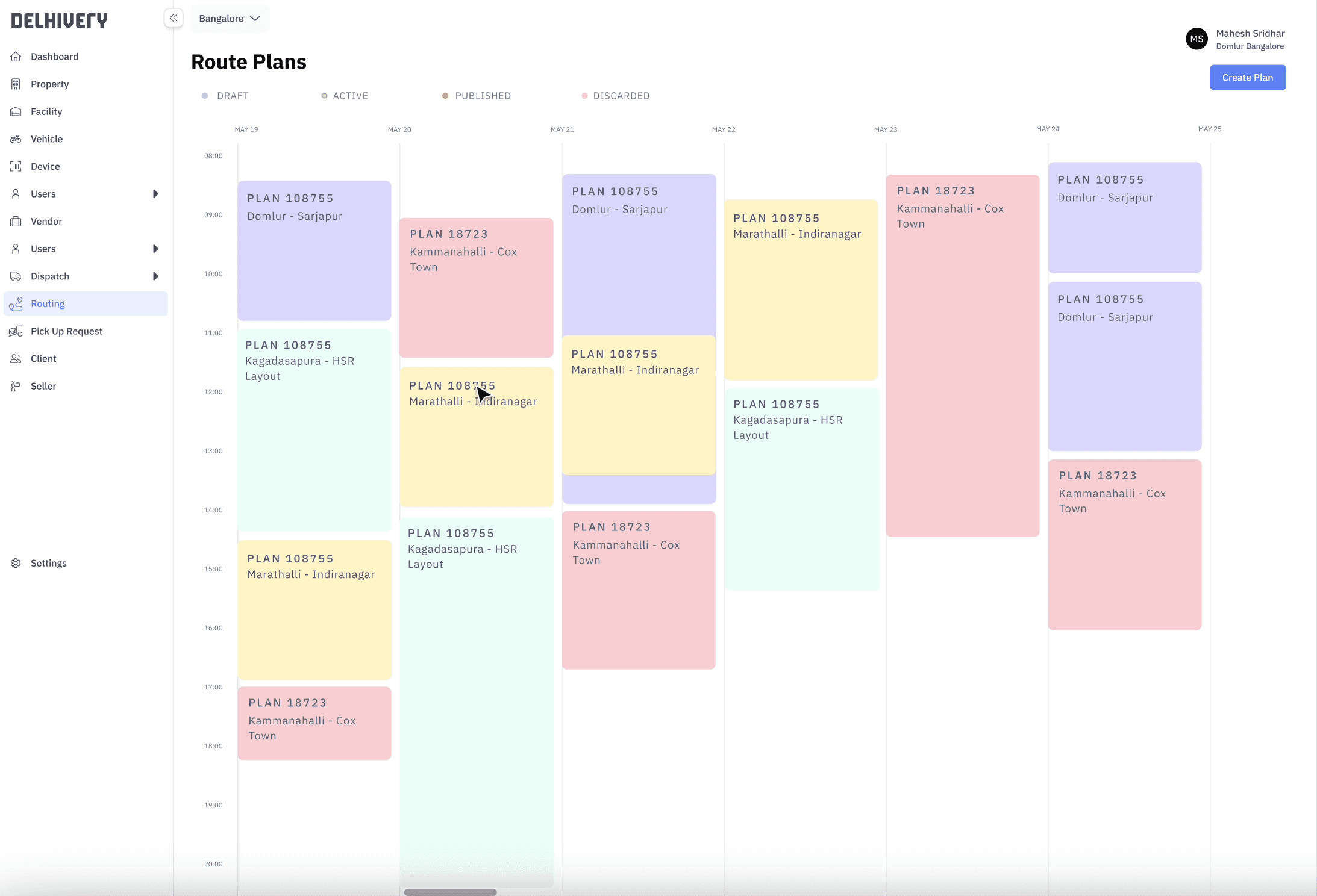
lots and lots of discarded ideas
Wizard to show steps
route plans shown on calendar
reordering jobs
An active challenge that we faced
Throughout this project, we had to make many, many rounds of revisions! Our client had a very structured organization which resulted in a lot of layers and many decision makers which led to twice the number of approvals and revisions!
If you made it till here, thanks! :)
read another case study
Why did we need a routing engine?
A Route optimization software was necessary for companies looking to streamline their logistics, increase customer satisfaction and improve costs.
There are multiple advantages of Routing Engines:

Improves efficiency
The engine generates the most efficient routes, by which drivers can avoid delivery delays and traffic congestion. Also improving delivery timing, enhances customer satisfaction.

Improved Customer satisfaction
Optimized routes ensure timely and accurate deliveries and help minimize delivery errors thereby enhancing customer satisfaction and loyalty.

Cost Savings
Routing engines can substantially reduce operational costs by minimising fuel consumption and emissions, reducing a need for additional vehicles and drivers and lowers expenses associated with maintaining large fleets.

Balanced Loading
Evenly loaded vehicles experience less stress on the components, reducing the risk of wear and tear, extending it’s lifespan and lowering maintenance costs. They are also less likely to be in accidents or experience loss of control.

Offers Flexibility
Route optimization softwares allow users to real time monitor and can make adjustments depending on unforeseen circumstances, minimizing delays and disruptions by providing visibility and transparency.

Enhanced safety
Routing engines optimize closer deliveries ensuring that drivers do not travel very large distances, helping them manage their fatigue issues and minimising risk of accidents, improving overall safety.
The Solutioning
We divided the flow into three major steps:
01
Allocating Vehicles and resources
Create a structured space where the user can learn about relevant financial
02
Setting up routing engine configurations
Create a structured space where the user can learn about relevant financial
03
Review the routing plan and commit to it.
Create a structured space where the user can learn about relevant financial
The Solutioning